The hanging road
The brief was a great chain bridge — colossal, heavy with ironwork, chains thick enough to walk along. The obstacle was that the planet had nowhere to put one. A brute search of ninety-six thousand chords found exactly one sea crossing in the whole world, and there was already a bridge standing on it. What followed is the most RACTR thing that happened all week: rather than demolish shipped content, the siting search learned a second definition of the word "crossing" — and the world turned out to have four of them nobody had looked for.
There was nowhere to build it
RACTR's bridges aren't placed by hand. A siting search reads the real terrain and looks for a chord — two banks at similar height with water in between and no easy way round. That search has always meant one thing by "water in between": the sea. It works, and it produced The Dry Span, the giant viaduct that has been on the map for weeks.
So the search ran for a second giant crossing and came back with a number that stopped the work: across ±3 km of the starter world, sampling 96,734 candidate chords, there is exactly one place on this planet where a great bridge can stand. And The Dry Span is on it — 23 metres from the midpoint. Every option on the table was bad. Build the new bridge somewhere it doesn't belong, or knock down a landmark that already works.
The sea is just the case where the middle is full of water
The fix is a single sentence of re-definition, and it is the kind of thing this engine rewards. A crossing is a chord between two high rims over a low middle. The sea is not the definition — it is one instance of it. Give the search a second datum that measures down to the floor rather than to the waterline, and it stops looking for channels and starts finding chasms.
There are four in the starter core. Nobody had put them there deliberately; they are what the terrain function happens to make. The best of them takes a 240-metre span with a floor 37 metres below the deck, 485 metres from spawn and 600 clear of the viaduct — close enough that a new character will find it, far enough that the two great bridges never share a horizon.
And it is a better answer to the original brief than the reference was. The bridge that inspired this crosses a river, where you could always have sunk piers if you wanted to. Ours leaps a gorge where no pier can be founded at all — so the chains aren't decoration on a bridge, they are the only reason the road exists.
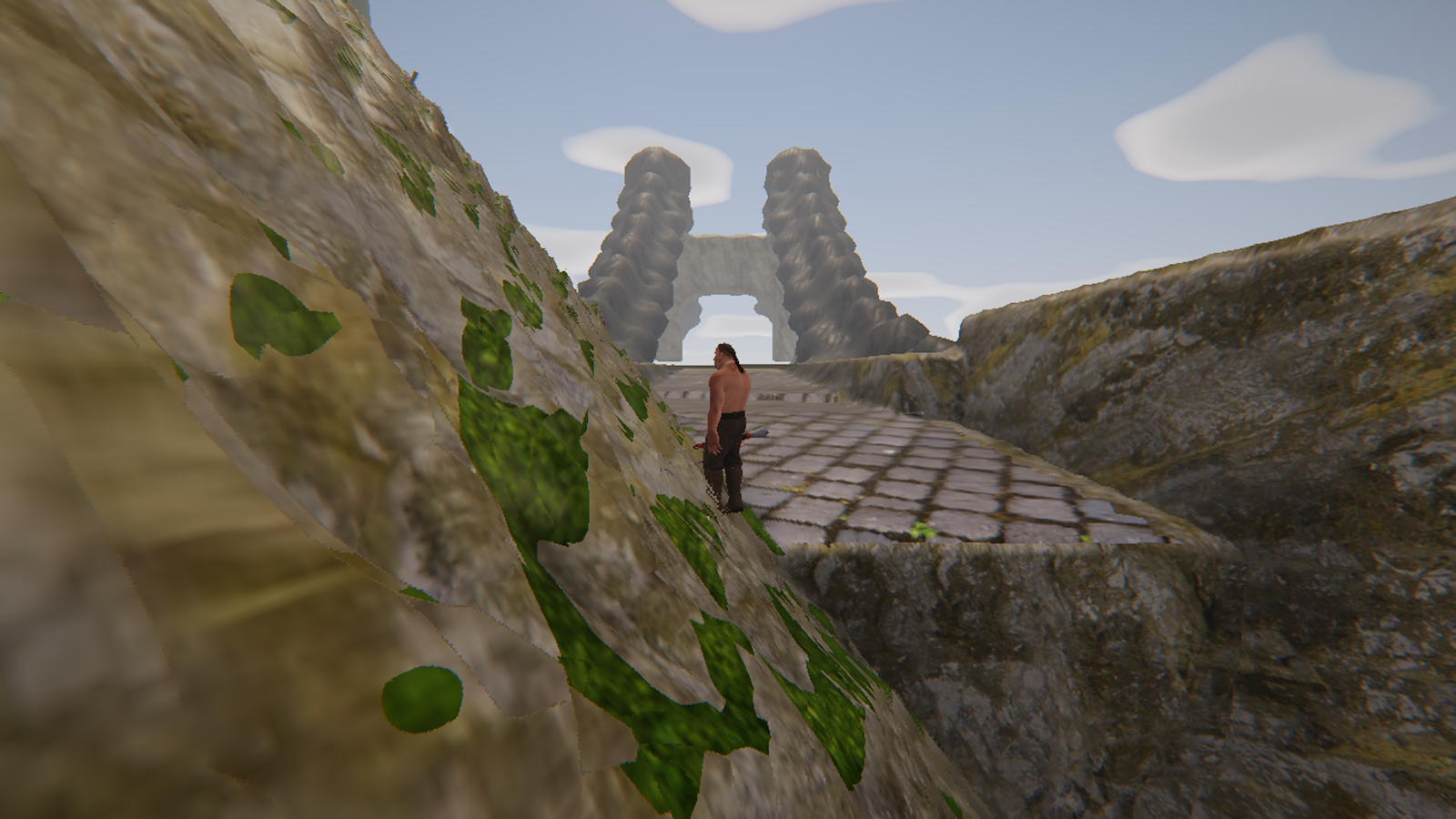
A hundred links for the price of one — and why that was wrong
Here is where the engine's nature pays. A chain link is a ring, and the engine can describe a ring exactly — no approximation anywhere. So a whole chain of interlocking rings is perfectly legal under the law that governs everything in this world, which is that the world must never lie about where things are.
The obvious optimisation is a shortcut: if the links repeat, draw one and pretend it's a hundred. It is a classic trick, it is beautiful, and I suggested it.
It is also wrong here, and the reason is worth keeping. A hanging chain is a catenary — the curve a heavy rope takes under its own weight. On a curve like that, the shortcut quietly lies, and it lies hardest exactly where the chain bends most — the places the eye looks first. So every link is placed on its true position along the curve, first time, and the interlock is checked properly: each link must pass through its neighbours and not through the ones beyond. Not measured by eye. Proven.
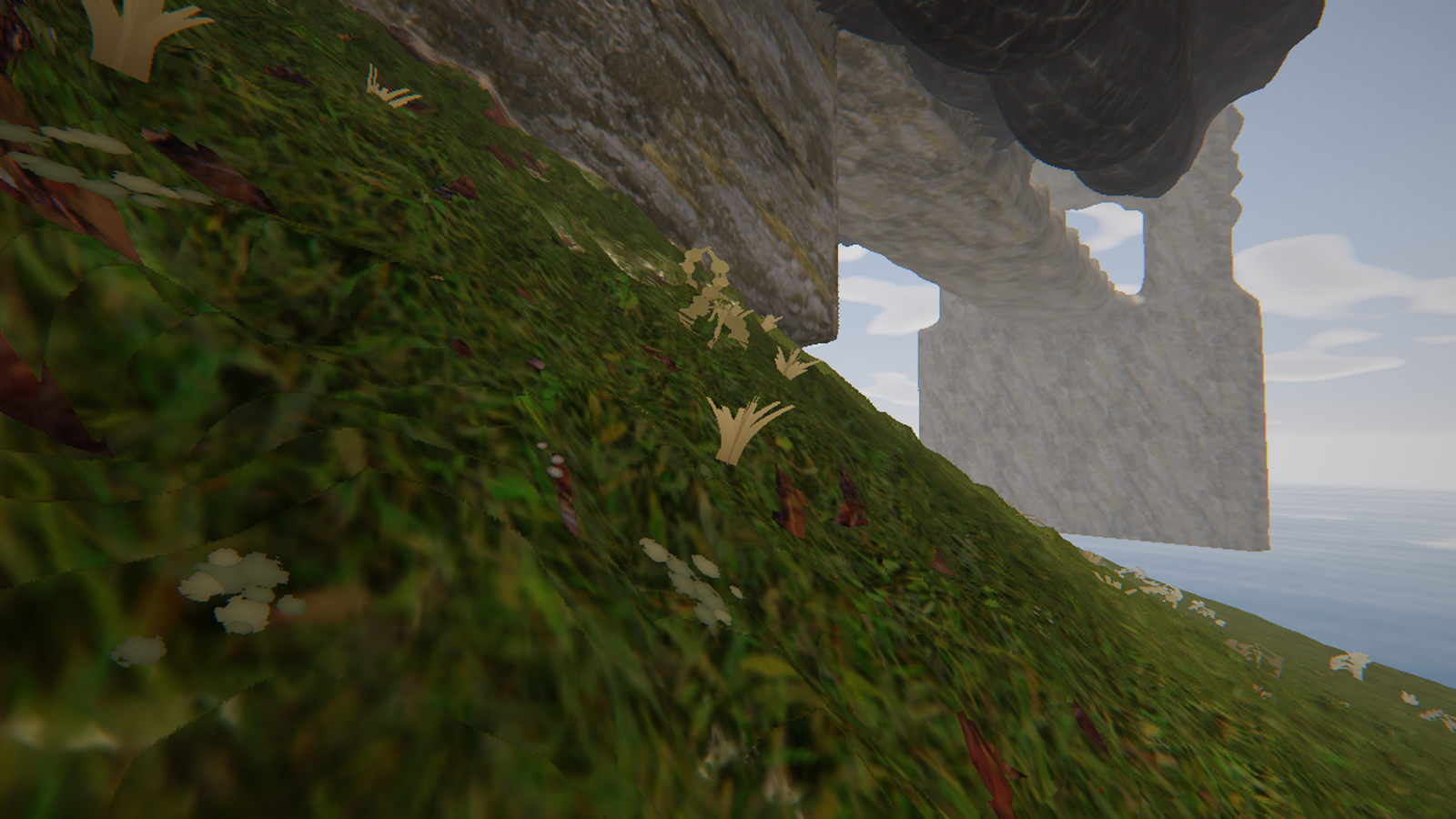
How tall is "massive"? Ask the renderer, not the artist
The brief said massive, twice. The honest way to answer that is not to pick a number that sounds impressive — it is to find the tallest thing the renderer can actually draw and then build to it.
Every renderer has a limit on how tall a thing it can draw. Ractr's is known exactly, and it's no longer a guessed number in the code but something the engine works out for itself.
The bridge tops out at 68.9 metres. It is the tallest thing in the world, and it uses nearly all of the height the renderer can give. If that is less than someone wanted, no taller tower can be drawn at any price until the renderer changes — which is a far more useful thing to know than a promise.
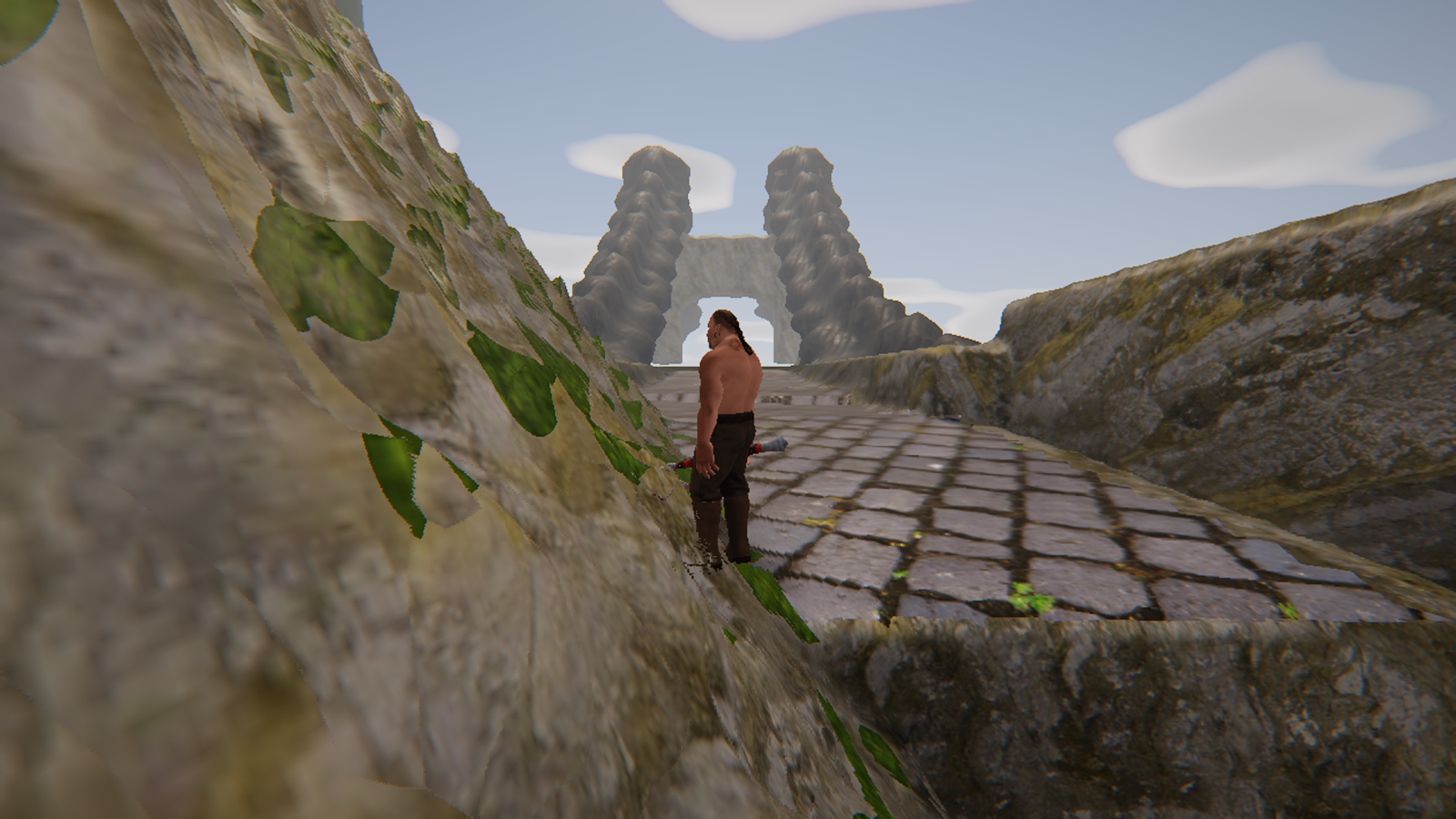
Two bugs found on the way
The first was in a test helper, which is the worst place for one. A function used to measure the world gave nonsense at long range, and it read the new bridge as breaking the engine's rules when it didn't. The geometry was innocent; the instrument was broken. Fixed, it reads clean.
The second is the sort of thing that only shows up when a lot of work happens at once. Agents building on branches were pointing the engine at their own directory to load their own shaders. That value was being silently rejected — the path didn't contain the marker file the loader looks for — and the search then walked up into the shared checkout and loaded main's shaders instead. It compiles, it runs, it draws a frame, and the change under test simply isn't in the picture. It was caught only because two versions had drifted enough that the graphics layer refused the mismatch outright. Had they still agreed, the screenshot would have been of somebody else's work.
The hanging road is live, and it costs the engine almost nothing more than the viaduct does. Suite green across bridges, chains, player, geometry, landmarks and the world-law tests. Frame timings were measured and then disbelieved: with a dozen agents compiling, the same commit read faster than the branch it was compared against, which is the machine talking and not the code. That bench gets taken again when the room is quiet.